How to Plan an Event: A Step-by-Step Guide for Any Size
ScanSync Team · · 7 min read
Learning how to plan an event is mostly about doing the right things in the right order. Whether you are organising a 40-person workshop or a 1,000-person conference, the same sequence applies: decide why the event exists, who it is for, and what you can spend, then work outwards to the venue, the team, the program, and the day itself. This guide walks through each stage, with checklists and links to deeper guides, so you finish with a plan you can actually run.
Step 1: Define the purpose and goals
Before you look at a single venue, write one sentence that explains why the event exists. "Bring our 200 customers together to see the new product and give feedback" is a purpose. "Have a conference" is not. If you need to convince colleagues that this groundwork is worth the time, see why event planning is important.
Then turn the purpose into two or three goals you can measure. The SMART criteria (specific, measurable, achievable, relevant, time-bound) are a useful test. For example:
- 150 of 200 invited customers attend
- At least 30 product demo sessions booked on the day
- An average feedback score of 4 out of 5 or higher
Goals guide every later decision, from the format to the budget. Our guide to setting event goals and KPIs covers how to choose metrics you can actually collect.
Step 2: Set the audience, budget, date, and venue
Audience
Write down who is coming, how many, and what they need. Consider where they travel from, what times suit them, accessibility needs, and what would make the event worth their time. A rough headcount range is enough at this stage, but it drives venue size, catering, and staffing.
Budget
Set a total budget range early, then break it into categories: venue, food and drink, AV, staff, marketing, and a contingency reserve. As a rule of thumb, many planners hold back 10 to 15 percent for surprises. Our event budget planning guide shows how to build line items, estimate per-attendee costs, and track actuals against estimates.
Date, venue, and format
With purpose, audience, and budget in hand, you can shortlist dates and venues. Check for clashes with holidays, industry events, and school calendars. If you're running the event at a school or university yourself, our guide to campus event check-in covers graduations, open days, and student IDs. Hold two or three candidate dates until the venue is confirmed.
When comparing venues, look beyond capacity and price:
- Location and transport links for your audience
- Step-free access, accessible toilets, and seating options
- What is included (furniture, AV, Wi-Fi, catering, staff)
- Load-in times, curfews, and noise limits
- Room for an arrival area where queues will not block the entrance
Our guide on how to choose an event venue includes a scoring sheet for comparing options. Also decide on format now: in person, online, or a hybrid event, since each needs different suppliers.
Step 3: Build the team and assign roles
Events fail at the handoffs, so give every area a single owner. Even on a two-person team, writing down who owns what prevents assumptions. In-house teams with stakeholders and approvals to manage can find more in our corporate event planning guide. A simple responsibility table works well:
| Area | Owner | Supports | Decides |
|---|---|---|---|
| Budget and contracts | Event lead | Finance | Event lead |
| Venue and logistics | Operations | Venue contact | Operations |
| Program and speakers | Content lead | Event lead | Content lead |
| Promotion and registration | Marketing | Content lead | Marketing |
| Arrival and check-in | Operations | Volunteers | Operations |
Put the key milestones on a shared timeline with deadlines. A simple spreadsheet or a Gantt chart is enough for most events. For a full timeline from months out to the day after, use our event planning checklist.
Step 4: Plan the program, suppliers, and promotion
Program
Draft the agenda from the attendee's point of view. Include arrival time, breaks every 60 to 90 minutes, meals, and a clear finish. Leave buffers: sessions run over, and people need time to move between rooms.
Suppliers
List every supplier you need, request quotes from at least two for the big items, and confirm in writing. Typical suppliers include:
- Catering, with dietary requirements collected in advance
- AV and staging
- Furniture and decor
- Photography or video
- Security and first aid, where the venue or local rules require it
- Transport or parking
Read cancellation terms carefully and check insurance and licensing requirements with the venue and a qualified professional where needed.
Promotion and registration
Decide how people will register or be invited, and what information you need from them. Collect only what you will use: name, email, ticket type, and any needs such as dietary or access requirements. For a seated dinner, that may also include table numbers and plus-ones, as covered in our gala and fundraiser check-in guide. Keep the attendee list in one place, ideally a spreadsheet you can export cleanly.
Set a promotion schedule: announcement, reminders, and a final "know before you go" message with the address, start time, and what to bring. A clear event communication plan keeps attendee messages and internal updates on schedule. Reminder timing also has a big effect on turnout; see our tips to reduce event no-shows.
Step 5: Prepare logistics and run the day
Before the day
- Write a run of show: a minute-by-minute schedule with owners and cues
- Assess risks such as weather, supplier failure, and medical incidents, and agree responses in an event risk management plan
- Prepare signage, a staff briefing sheet, and a contact list for every supplier
- Import your attendee list into your check-in tool and test it with real tickets
On the day
Arrive early, walk the venue, and brief the team on the run of show, emergency procedures, and who makes decisions. Open the doors on time and watch the arrival rate. If you are scanning tickets, our guide on how to check in attendees at an event covers door setup and staffing in detail. A live arrivals count helps you decide when to start the program and where to move staff.
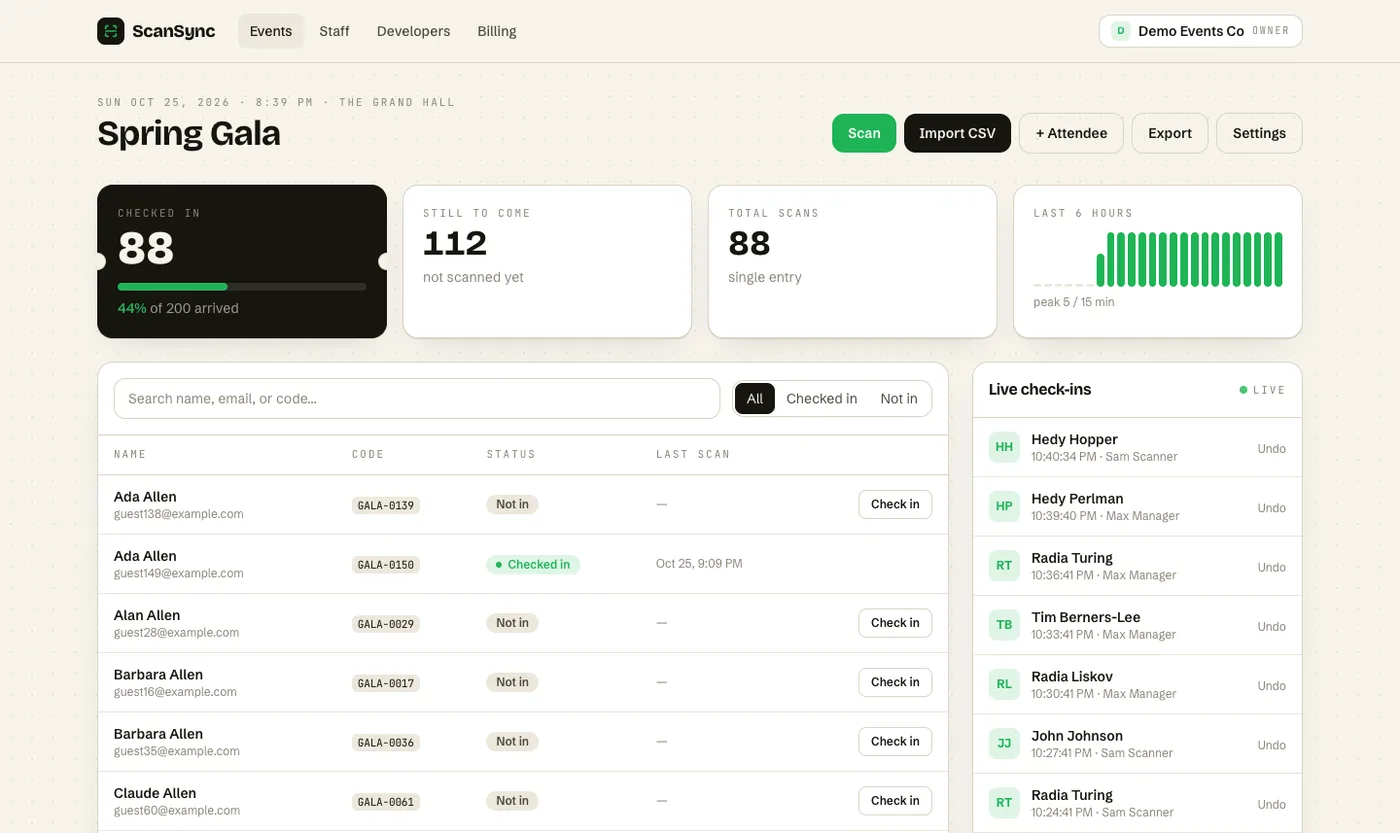 A live dashboard shows who has arrived and who is still to come.
Step 6: Follow up and review
The event is not over when the doors close. Within a few days:
- Thank attendees, speakers, sponsors, and staff
- Send a short feedback survey while the event is fresh
- Pay suppliers and reconcile the budget against actual spend
- Export attendance data and compare it with registrations
- Hold a short review with the team: what worked, what to change, and what to keep
Compare your results with the goals from Step 1. Our guide to the post-event attendance report shows what to include. Save your notes and templates, because the next event will be much faster to plan.
Summary
Planning an event works best when you follow a clear order: purpose and goals first, then audience and budget, then date, venue, team, program, and suppliers. Give every task a named owner, write a run of show, and plan for the risks you can foresee. On the day, focus on a smooth arrival and a calm team. Afterwards, follow up quickly and measure results against the goals you set at the start.
Next steps
When you reach the arrival stage, ScanSync can handle check-in: import your attendee list from CSV, scan tickets with a phone or browser, and watch arrivals live. You can create a free account to try it on a small event, or see pricing for larger ones.
Frequently asked questions
How far in advance should you plan an event? +
As a rule of thumb, small internal events can come together in four to eight weeks, while conferences and large public events usually need three to six months or more. Venue availability is often the deciding factor, so check it early.
What are the first steps in planning an event? +
Define why the event exists, who it is for, and what success looks like. Then set a budget range, because the purpose, audience, and budget together narrow down your date, venue, and format.
What is the most commonly forgotten part of event planning? +
Follow-up is often forgotten: thanking attendees, collecting feedback, paying suppliers, and reviewing results. Arrival logistics such as signage and check-in are also frequently left too late.
Check people in the simple way
Upload your list, scan at the door, and watch arrivals live. Free for your first event.